If you’re looking for a projection surface that stays perfectly flat and wrinkle-free, tab-tensioned screens are a smart choice. They incorporate tensioning mechanisms along the edges to keep the fabric taut, ensuring sharp, clear images. These screens are durable and improve picture quality compared to traditional models prone to sagging. Want to learn more about how they work and if they’re right for you? Keep exploring to find out all the details.
Key Takeaways
- Tab-tensioned screens have built-in tensioning mechanisms that keep the projection surface flat and wrinkle-free.
- They provide superior image clarity compared to traditional screens by maintaining consistent fabric tension.
- Ideal for environments demanding high-quality visuals, such as home theaters and conference rooms.
- Easy to install and maintain, ensuring long-term durability and optimal picture performance.
- Consider a tab-tensioned screen if you want a smooth, professional-looking projection surface with minimal distortion.
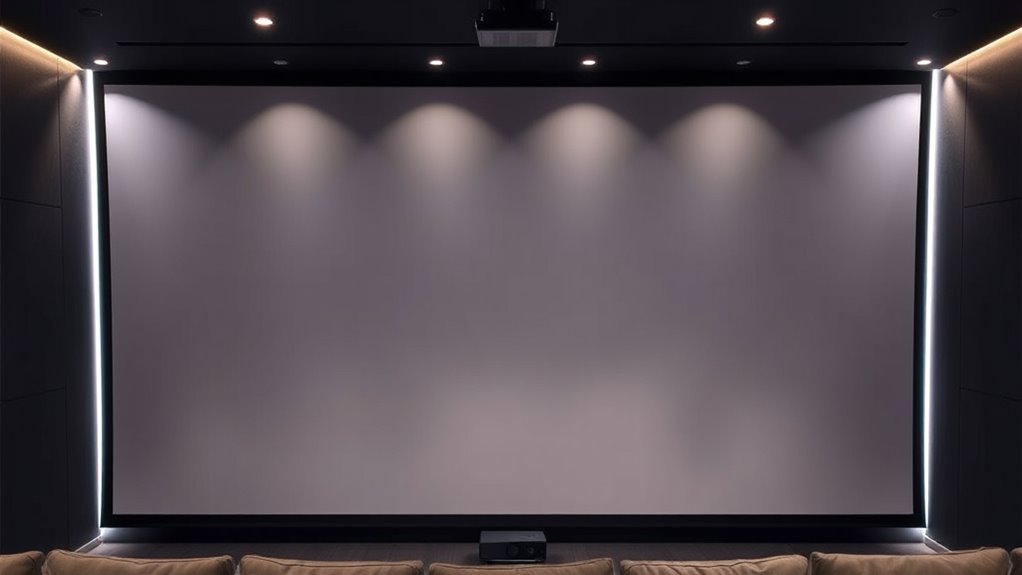
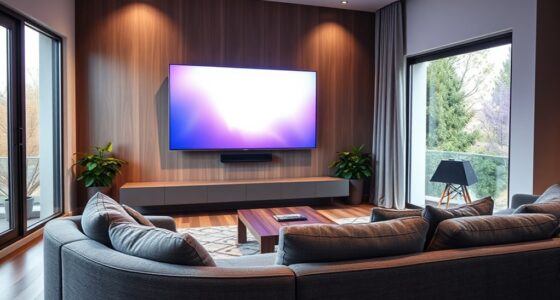
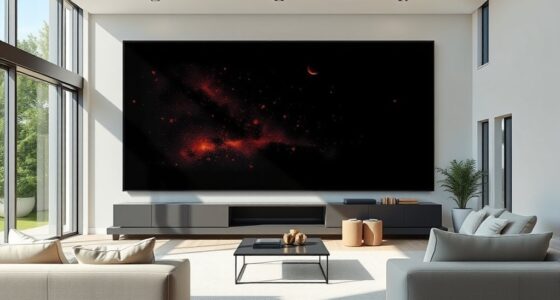
Have you ever wondered how to achieve a perfectly smooth and wrinkle-free projection surface? If so, tab-tensioned screens might be exactly what you need. These innovative screens are designed to maintain a taut, flat surface, ensuring your projected image looks sharp and clear. Unlike traditional screens that can sag or develop wrinkles over time, tab-tensioned screens incorporate tensioning mechanisms at regular intervals along the edges. This feature keeps the fabric tight and smooth, providing a consistent viewing experience. When considering whether to get one, it’s helpful to conduct a benefits comparison. Tab-tensioned screens typically offer superior image quality because their tensioned surface reduces wrinkles, ripples, or waves that could distort the image. They’re also more durable, as the tension helps prevent sagging or fabric deformation over years of use. Plus, many models are designed with easy access panels or quick-release mechanisms, making maintenance and repairs straightforward. If you’re thinking about installing a tab-tensioned screen, paying attention to installation tips can make a significant difference. First, guarantee your mounting surface is stable and level; uneven walls can compromise the tensioning process. Use a reliable level and measuring tape to mark the precise mounting points, aligning the brackets perfectly. When attaching the brackets, follow the manufacturer’s instructions closely, and be sure to use the appropriate anchors for your wall type—whether drywall, concrete, or wood. Properly securing the brackets is essential for maintaining consistent tension across the entire screen. Once mounted, carefully attach the tensioning bars or mechanisms, and then evenly tighten the tensioning screws or knobs. This step is vital to prevent uneven tension, which can cause wrinkles or slack spots. Keep in mind that proper installation not only enhances the image quality but also extends the lifespan of your screen. Regularly check the tension and make adjustments as needed, especially if you notice any slack developing over time. Installing a tab-tensioned screen isn’t overly complicated, but precision and patience are key. Taking your time to carefully follow installation tips ensures a professional-looking setup that performs reliably. Overall, if you’re serious about enjoying crisp, distortion-free images and want a durable, easy-to-maintain projection surface, a tab-tensioned screen is worth considering. Its benefits comparison clearly shows it outperforms many traditional options, making it a smart investment for home theaters, conference rooms, or any space where picture quality matters most. With proper installation and regular upkeep, a tab-tensioned screen can provide years of flawless performance, elevating your viewing experience to new heights. Additionally, understanding the importance of fabric tensioning mechanisms can help you select the best model for your needs.
tab-tensioned projection screen
As an affiliate, we earn on qualifying purchases.
As an affiliate, we earn on qualifying purchases.
Frequently Asked Questions
Are Tab-Tensioned Screens Suitable for Outdoor Use?
Yes, tab-tensioned screens can be suitable for outdoor use if they offer weather resistance and UV protection. You should look for screens made with durable, weatherproof fabrics that resist rain, humidity, and sun damage. Proper installation and maintenance also help guarantee longevity. With the right features, a tab-tensioned screen can provide you with a reliable, high-quality outdoor viewing experience, even in challenging weather conditions.
How Long Do Tab-Tensioned Screens Typically Last?
Tab-tensioned screens usually last between 5 and 10 years, depending on durability considerations like exposure to sunlight and weather. You’ll want to check warranty coverage, as it often offers protection against early wear or defects. Proper maintenance, such as cleaning and storing them during harsh conditions, extends their lifespan. While they’re built for durability, understanding these factors helps you get the most out of your investment.
Can I Install a Tab-Tensioned Screen Myself?
Yes, you can install a tab-tensioned screen yourself. For DIY installation, you’ll need basic tools like a power drill, screwdriver, level, measuring tape, and possibly a ladder. Follow the manufacturer’s instructions carefully, measure accurately, and guarantee the mounting surface is sturdy. With patience and the right tools, you can efficiently set up your tab-tensioned screen, saving money and achieving a professional-looking result.
What Maintenance Is Required for Tab-Tensioned Screens?
You should regularly clean your screen with a soft cloth and gentle screen cleaner to maintain clarity. Check the tension periodically; if the screen sags or wrinkles, you might need to adjust the tension to keep it taut. Keeping up with these simple maintenance tasks ensures your tab-tensioned screen stays in ideal condition, providing a clear, smooth viewing experience without damage or sagging.
Are Tab-Tensioned Screens Compatible With All Projectors?
Tab-tensioned screens are generally compatible with most projectors, but you should check your projector’s projection compatibility and the screen material. Guarantee your projector’s resolution and brightness match the screen’s specifications for ideal image quality. Some screen materials work better with certain projection types, like LCD or DLP. Always verify compatibility to avoid image distortion or poor quality, and consult manufacturer guidelines before purchasing.
fixed frame tensioned projector screen
As an affiliate, we earn on qualifying purchases.
As an affiliate, we earn on qualifying purchases.
Conclusion
So, savvy about tab-tensioned screens, you now see their sleek, snug stance and stellar stability. If you seek a smooth, snag-free screen surface, this sturdy setup stands supreme, shielding shadows and sagging. Whether for movies or meetings, a tab-tensioned screen transforms your space into a stunning, seamless scene. Summon the style, stability, and sheer sophistication—step up to a screen that stays taut, tidy, and truly terrific. Your perfect projection awaits!
wrinkle-free projection screen
As an affiliate, we earn on qualifying purchases.
As an affiliate, we earn on qualifying purchases.
easy install tab tensioned screen
As an affiliate, we earn on qualifying purchases.
As an affiliate, we earn on qualifying purchases.