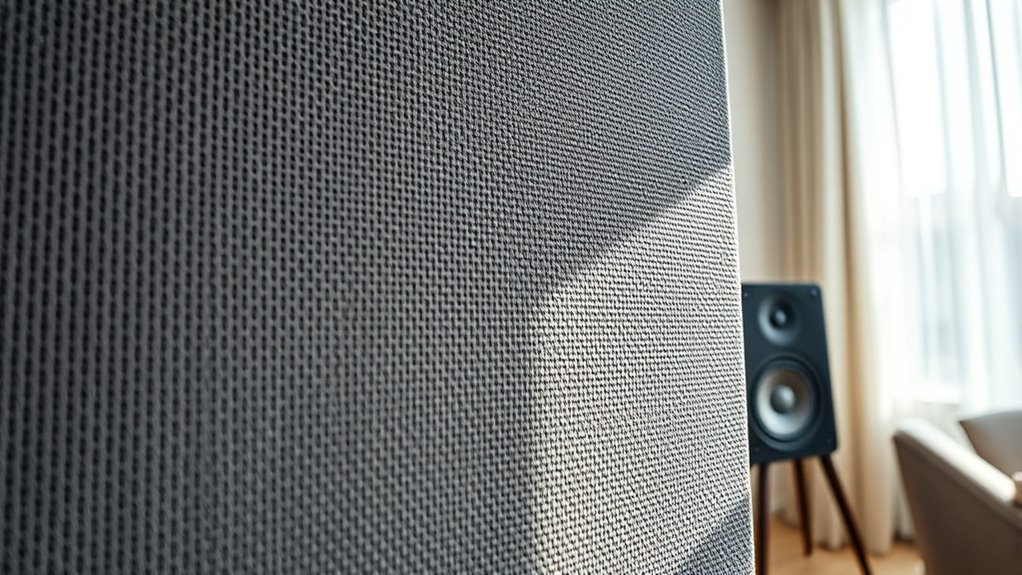

Yes, the screen material you choose can considerably affect sound quality. Materials that are acoustically transparent allow sound to pass through without distortion or obstruction, ensuring clear dialogue and immersive audio. Porous fabrics and specialized meshes are designed to balance durability with sound transmission. If you’re curious about how different materials impact performance and long-term durability, keep exploring to find the best option for your setup.
Key Takeaways
- Different materials vary in porosity, directly impacting how well sound passes through the screen.
- Porous fabrics and specialized meshes generally offer better acoustic transparency than dense materials.
- Material composition, including treatments for environmental resistance, can influence sound transmission quality.
- Durable, high-quality screen materials maintain acoustic properties over time despite wear and environmental factors.
- Selecting the right material balances sound clarity with physical resilience, ensuring long-term audio performance.
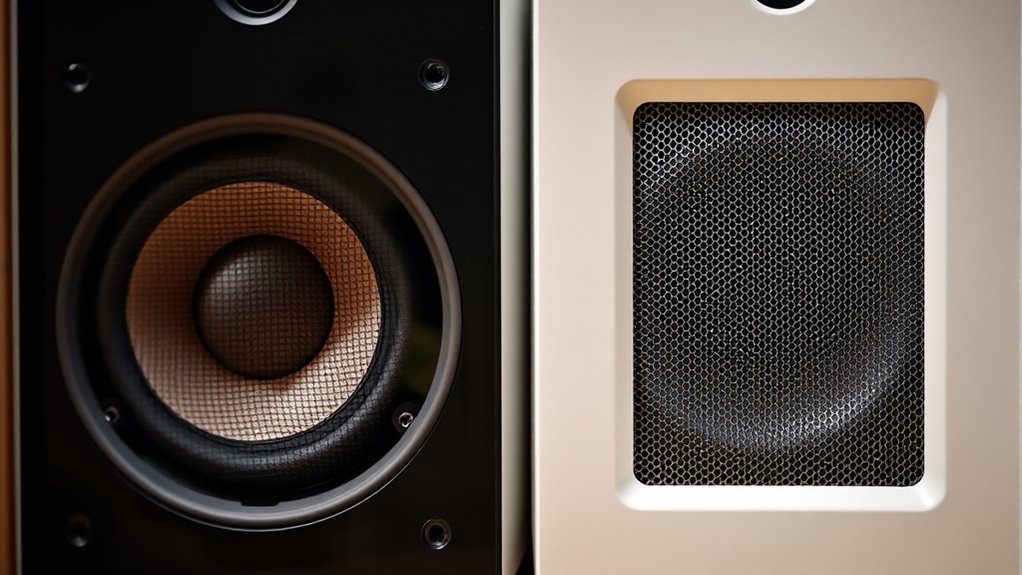
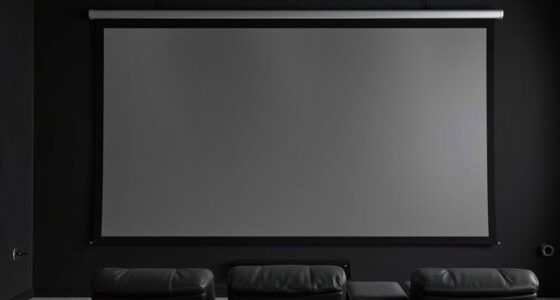
Acoustic transparency refers to a material’s ability to transmit sound waves without substantially altering or blocking them. When considering screen materials for your home theater or conference room, this characteristic becomes essential. You want the sound to pass through the screen clearly and naturally, without muffling or distorting it. This means choosing materials that allow sound to flow freely while still serving their primary function—displaying visuals.
One of the main benefits of using acoustically transparent screens is improved sound quality. When sound passes through the material with minimal interference, you get a more accurate and immersive audio experience. This is especially important if you’re using speakers placed behind the screen, a common setup for clean aesthetics and ideal sound distribution. The right material ensures sound absorption is balanced; it doesn’t just let sound pass through but also helps control echoes and reflections that might otherwise distort audio. This balance enhances clarity, making dialogue, music, and effects sound more natural and precise.
Material durability is equally important. You need a screen material that withstands regular use, environmental factors, and potential wear and tear. Durable materials resist tears, scratches, and fading, maintaining their acoustic transparency over time. When selecting a screen, consider how the material holds up under different conditions—whether it’s in a dedicated media room or a space with high traffic. A high-quality, durable material ensures you won’t have to replace the screen frequently, saving you money and hassle in the long run.
Furthermore, the composition of the material influences both sound absorption and durability. Porous fabrics and specialized meshes typically offer excellent sound transmission while resisting damage. Some materials are treated to resist moisture, stains, and UV damage, making them suitable for various environments. Additionally, understanding the material composition helps determine how well the screen maintains its acoustic properties over time. The combination of these qualities guarantees that your screen not only performs well acoustically but also remains visually appealing and functional over time.
In essence, choosing a screen material with high acoustic transparency and good durability means you don’t have to compromise between sound quality and longevity. You get a setup that preserves the clarity of your audio while standing up to everyday use. By focusing on these aspects, you verify your audio-visual experience remains sharp, immersive, and hassle-free for years to come.
Frequently Asked Questions
How Does Screen Material Impact Overall Audio Experience?
You’ll notice that screen material directly impacts your audio experience by affecting its acoustic properties. A high-quality, acoustically transparent material permits sound to pass through with minimal distortion, enhancing clarity. Additionally, durable materials guarantee long-lasting performance without compromising sound quality. When choosing screen material, consider both acoustic properties and durability to get the best balance between sound clarity and longevity, creating a more immersive audio-visual experience.
Are Certain Screen Materials Better for Sound Clarity?
You’ll find that screen materials with high acoustic transparency are better for sound clarity, much like a clear window lets in more light. Some materials, like perforated screens, balance durability and aesthetic appeal while maintaining sound quality. I once watched a movie where the screen’s subtle perforations made dialogue crisp and immersive, proving that choosing the right material improves both sound clarity and overall viewing experience.
Does Screen Transparency Influence Speaker Performance?
Yes, screen transparency can influence speaker performance. When choosing a transparent screen, consider its durability, as some materials might scratch or degrade faster, affecting sound clarity over time. Additionally, transparent screens with better color accuracy help maintain visual quality without compromising sound, ensuring your setup stays both functional and visually appealing. Ultimately, selecting a high-quality, durable transparent screen enhances both sound performance and overall viewing experience.
Can Screen Material Choices Improve Home Theater Audio?
Choosing the right screen material can indeed improve your home theater audio by supporting silent acoustics and ensuring durability. When you select a material that’s acoustically transparent, sound waves pass unobstructed, enhancing clarity. Durable materials prevent sagging or damage over time, maintaining sound quality. By prioritizing these qualities, you create a more immersive experience, where visuals and audio work seamlessly, making your home theater a true cinematic haven.
Are There Trade-Offs Between Visual Quality and Sound Quality?
Yes, there are trade-offs between visual clarity and sound quality. If you choose a screen material optimized for visual clarity, it might compromise acoustic transparency, affecting sound quality. Conversely, more durable, acoustically transparent materials may slightly reduce visual sharpness. You need to balance these factors based on your priorities, ensuring the material offers enough durability while maintaining sufficient transparency for good sound performance.
Conclusion
When choosing a screen material, don’t underestimate its impact—you could be turning your home theater into a world of silent chaos or crystal-clear symphony! Even tiny differences in acoustic transparency can make your sound seem like it’s traveling through a secret tunnel or bouncing off walls. So, pick your material wisely, because the right choice could transform your audio experience from almost good to mind-blowingly perfect—your ears will thank you!