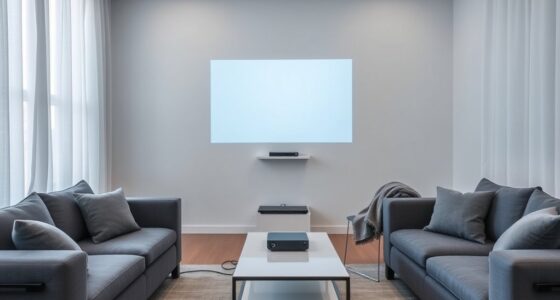

To effectively soundproof your home theater, focus on sealing gaps around doors, windows, and outlets with weatherstripping or sealant. Use dense drywall or mass-loaded vinyl to block sound transmission through walls, and add absorptive materials like foam panels, bass traps, and diffusers to improve sound quality inside. Cover floors with thick carpets or rugs, and hang heavy drapes over openings. Keep noise in and outside sounds out—discover more tips to create the perfect immersive space.
Key Takeaways
- Use dense drywall, mass-loaded vinyl, and soundproof drywall to block sound transmission through walls.
- Seal gaps around doors, windows, and outlets with weatherstripping and sealants for maximum noise containment.
- Install acoustic treatments like foam panels, bass traps, and diffusers to improve internal sound quality and reduce echoes.
- Add thick carpets, rugs, and heavy curtains to dampen sound leaks through floors and windows.
- Prioritize a sealed environment with proper placement of acoustic treatments to effectively keep sound in and noise out.

Creating a home theater can be an exciting way to enjoy your favorite movies and music, but without proper soundproofing, noise can easily disturb neighbors or other areas of your home. To prevent this, you need to focus on effective sound insulation and acoustic treatments. Sound insulation involves installing materials that block sound from escaping the room or entering from outside. This is essential if you share walls with neighbors or want to keep noise from spilling into other parts of your home. You might start by adding mass-loaded vinyl or dense drywall to your walls, as these materials help absorb and block sound waves. Sealing gaps around doors, windows, and electrical outlets with weatherstripping or acoustic sealant also notably reduces sound leaks.
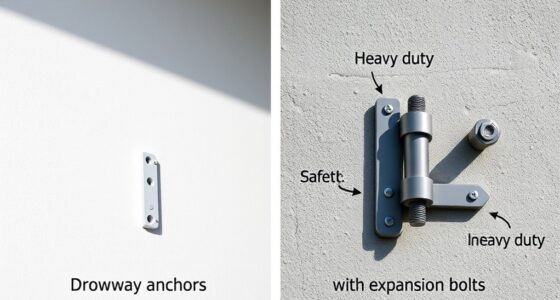
Effective soundproofing with dense drywall and sealing gaps minimizes noise disturbances.
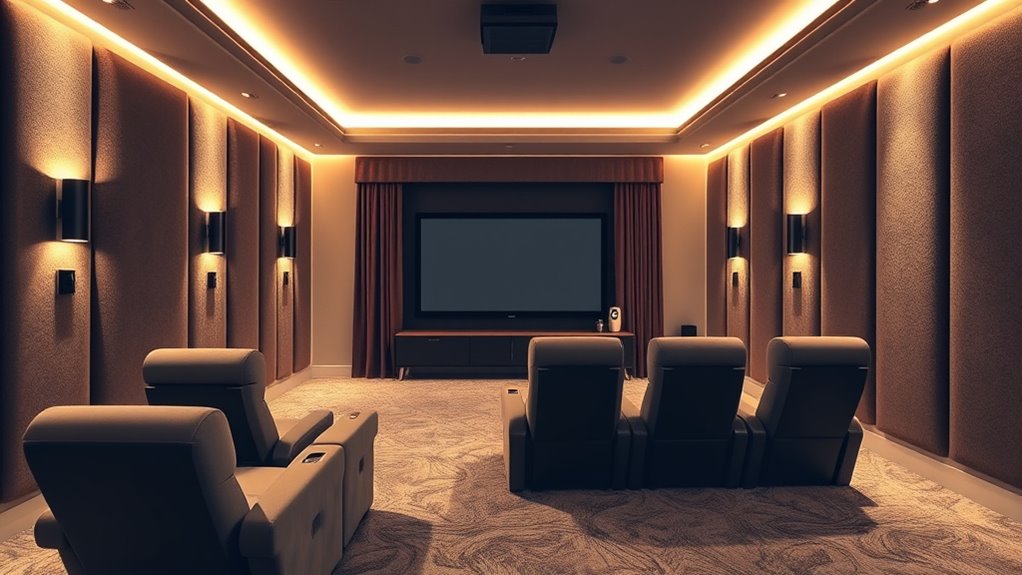
Acoustic treatments go beyond just blocking sound; they improve the room’s internal acoustics, making audio clearer and more immersive. These treatments include installing bass traps, diffusers, and foam panels on walls and ceilings. Not only do they help control echoes and reverberations, but they also prevent sound from bouncing around excessively. When choosing acoustic treatments, consider the room’s shape and size, aiming for a balanced distribution of diffusers and absorbers. You don’t want the room to sound overly dead or too lively. Proper placement is key, so position foam panels at reflection points—these are spots where sound waves bounce directly to your ears when seated.
Combining sound insulation with acoustic treatments creates a double layer of soundproofing that enhances your home theater experience. For example, installing soundproof drywall inside the walls helps contain sound, while acoustic panels on the interior surfaces improve sound quality and reduce noise pollution. Additionally, using thick carpets or rugs on the floor and heavy drapes over windows can further dampen sound transmission. Remember, the goal is to create a sealed environment that minimizes sound escape and optimizes audio clarity within the room. Incorporating soundproofing materials into your planning ensures a more effective and durable solution.
Investing in quality materials and careful planning will pay off. It’s not just about muffling noise but also about crafting an environment where sound behaves exactly as you want it to. With the right sound insulation and acoustic treatments, your home theater can become a private sanctuary, delivering theater-quality sound without disturbing others. Proper soundproofing guarantees that your movie nights are immersive and enjoyable, free from external noise interruptions, and that your neighbors stay undisturbed.
Frequently Asked Questions
How Much Does Professional Soundproofing Typically Cost?
Professional soundproofing typically costs between $1,000 and $10,000, depending on your room size and desired level of sound isolation. Your budget considerations play a key role in selecting materials and techniques, such as adding acoustic panels or specialized drywall. It’s best to get detailed cost estimates from experts to match your needs and budget, ensuring you invest wisely in your home theater for ideal soundproofing results.
Can Soundproofing Affect Room Temperature or Humidity?
Soundproofing can impact your room’s temperature and humidity levels. The insulation impact may cause your space to retain more heat, making it warmer, or restrict airflow, affecting humidity. Proper moisture control is essential to prevent mold and dampness. Using breathable insulation and ventilation helps maintain a comfortable environment, so you should consider these factors when planning your soundproofing to keep your home theater cozy and dry.
How Long Does It Take to Install Soundproofing in a Home Theater?
You’ll typically spend a few days on installation, but it varies with the room size and soundproofing method. First, you’ll need to complete preparation steps like sealing gaps and gathering materials. The installation timeline includes attaching soundproof panels, insulating walls, and sealing doors. While it might seem quick, rushing can compromise effectiveness. Planning carefully guarantees a smooth process, so set aside a weekend or so for a thorough, quality job.
Are There Eco-Friendly Soundproofing Options Available?
Yes, eco-friendly soundproofing options are available. You can choose sustainable options like recycled denim insulation, cellulose made from recycled paper, or cork panels. These eco-friendly materials effectively reduce noise while minimizing environmental impact. By selecting sustainable options, you’ll create a quieter home theater environment and contribute to eco-conscious living. Many suppliers now offer these green alternatives, making it easier for you to prioritize both performance and sustainability in your soundproofing project.
Will Soundproofing Materials Interfere With Wi-Fi Signals?
Think of soundproofing materials as a fortress wall; they can potentially block Wi-Fi signals if dense or thick. The soundproofing impact might cause some Wi-Fi interference, especially if you use materials like mass-loaded vinyl or dense insulation near your router. To keep your connection strong, position your Wi-Fi router away from thick soundproof barriers, or choose lighter, eco-friendly materials that minimize Wi-Fi interference without sacrificing soundproofing quality.
Conclusion
When you finally finish soundproofing your home theater, you’ll notice how unexpectedly peaceful it feels—like the perfect storm of quiet and clarity. It’s funny how taking those small steps, like sealing gaps or adding panels, can turn chaos into calm just when you least expect it. So, as you sit back and enjoy your movies, remember that those quiet moments are a happy coincidence of your effort. Now, let the sound stay in and the noise stay out.