To optimize your projector sound, position your main speakers at ear level when seated and angle them slightly inward to focus sound toward the seating area. Avoid placing speakers behind furniture or near walls to prevent muffling and reflections. Surround speakers should be behind and to the sides for a natural surround effect. Test and adjust angles and distances until the sound feels balanced and immersive. Keep exploring these tips for better sound diffusion and room coverage.
Key Takeaways
- Place main speakers at ear level when seated for clear, balanced sound delivery.
- Angle speakers slightly inward toward the seating area to enhance soundstage and diffusion.
- Avoid positioning speakers behind furniture or near walls to prevent reflections and distortion.
- Surround speakers should be positioned behind and to the sides for immersive audio coverage.
- Test with familiar audio, then fine-tune angles and distances for optimal clarity and diffusion.
To guarantee clear and immersive projector sound, proper speaker placement is essential. When you position your speakers correctly, you ensure that the audio reaches your ears with the right balance and clarity. The goal is to create a sound environment that feels natural and surrounds you, rather than coming from one direction or sounding muffled. To achieve this, focus on how you arrange your speakers in relation to your seating area and the projector itself. Proper speaker placement directly influences sound diffusion, which is how sound waves spread throughout the room. If you neglect this, you risk uneven sound distribution, dead spots, or audio that feels disconnected from the visual experience.
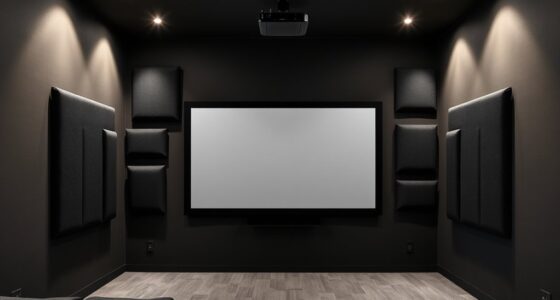
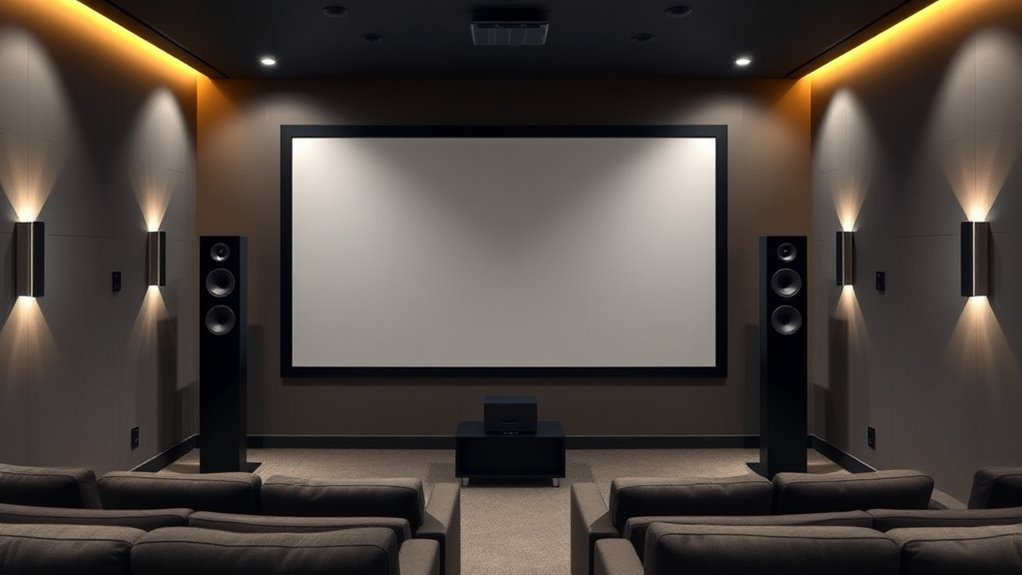
Start by positioning your main speakers at ear level when you’re seated. This placement allows sound to travel directly toward you, minimizing reflections and distortions. If your speakers are placed too high or too low, sound diffusion becomes uneven, and you might notice a loss of clarity or a sense that the audio isn’t synchronized with what you’re watching. For ideal sound diffusion, angle your speakers slightly inward toward your seating area. This ensures that the sound waves converge in the space where you’re sitting, creating a cohesive soundstage. Avoid placing speakers behind furniture or too close to walls, as this can cause reflections that muddle the audio or produce unwanted echoes.
Position your main speakers at ear level and angle inward for optimal sound diffusion.
In terms of distance, try to keep your front left and right speakers equidistant from your seating area. Symmetry in placement helps balance sound diffusion, reducing the likelihood of one side overpowering the other. If you have surround speakers, position them slightly behind and to the sides of your seating area, at ear level or slightly above. This setup enhances the surround effect, immersing you in the audio environment. Keep in mind that the size and shape of your room influence how sound diffuses. Larger rooms might require more precise placement, while smaller spaces benefit from closer positioning of speakers to avoid dead zones.
Finally, test your setup by playing a familiar soundtrack or scene to assess how the sound fills the room. Adjust the speaker angles and distances as needed, paying attention to how sound diffusion enhances clarity and immersion. When you take the time to arrange your speakers thoughtfully, you eliminate guesswork and create a balanced, enveloping audio experience that complements your projector viewing. Proper speaker placement isn’t just about placement; it’s about crafting an environment where sound and visuals work seamlessly to elevate your entertainment.
home theater surround speakers
As an affiliate, we earn on qualifying purchases.
As an affiliate, we earn on qualifying purchases.
Frequently Asked Questions
How Do Room Acoustics Affect Speaker Placement?
Room acoustics markedly impact speaker placement because sound absorption and echo reduction are key. You should position speakers to minimize reflective surfaces that cause echo and focus on absorbing excess sound. Proper placement reduces unwanted reverberations, ensuring clear audio. By adjusting speakers away from walls and using soft furnishings, you enhance sound quality, making dialogue and audio cues more intelligible for your audience.
What Is the Ideal Speaker Height for Optimal Sound?
For ideal sound, set your speaker height so that the tweeters are roughly at ear level when you’re seated. Proper speaker alignment ensures sound reaches your ears directly, avoiding distortion or muffling. Adjust the height and angle of your speakers to maintain this alignment, which enhances clarity and balance. Don’t forget, small tweaks can make a big difference in creating an immersive audio experience tailored to your room’s acoustics.
How Can I Prevent Sound Reflections From Walls?
Think of your room as a concert hall; you want clear notes, not echoes. To prevent sound reflections from walls, use wall treatments like acoustic panels or curtains that absorb sound. Soundproofing with specialized insulation also minimizes reflections and external noise. Position your speakers away from reflective surfaces, and consider adding rugs or furniture to break up sound waves. These steps create a soundscape that’s rich and immersive, free from unwanted echoes.
What Is the Best Speaker Type for Projector Setups?
You should choose bookshelf or satellite speakers for your projector setup, as they deliver clear sound without overwhelming the space. Opt for speakers with a wattage that matches your amplifier’s power output, ensuring they won’t distort or blow out. Check the speaker impedance—ideally 8 ohms—to match your system, which helps prevent overloading. This combination provides balanced, high-quality audio for an immersive viewing experience.
How Do I Balance Sound Levels Between Speakers?
You should start by performing speaker calibration, ensuring each speaker’s volume and delay are properly adjusted for balanced sound. Use sound equalization to fine-tune frequencies, reducing any overpowering or muddy sounds. Listen carefully from different seating positions, making incremental adjustments as needed. This process helps create a cohesive audio environment, where dialogue, music, and effects blend seamlessly, providing an immersive viewing experience without any speaker overpowering the others.
ear level bookshelf speakers
As an affiliate, we earn on qualifying purchases.
As an affiliate, we earn on qualifying purchases.
Conclusion
Now that you know the right way to arrange your speakers, you can enjoy immersive sound that fills the room. Imagine the clarity of dialogue and the depth of bass wrapping around you, unlike the dull, distant audio from poorly placed speakers. By putting these tips into action, you turn a simple viewing into a cinematic experience. Don’t settle for guesswork—arrange your speakers thoughtfully and let your home theater truly come alive.
projector sound speaker placement
As an affiliate, we earn on qualifying purchases.
As an affiliate, we earn on qualifying purchases.
in-wall surround sound speakers
As an affiliate, we earn on qualifying purchases.
As an affiliate, we earn on qualifying purchases.