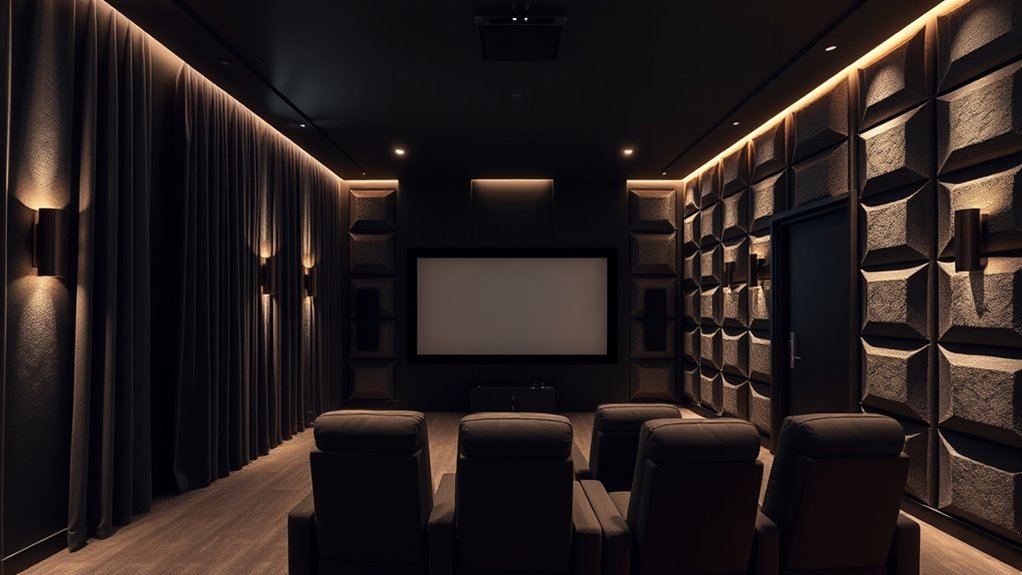

To keep noise in and out for late-night movies, you need advanced soundproofing techniques. Add mass-loaded vinyl or dense drywall to walls to block sound transmission, and use high-quality insulation like mineral wool or fiberglass to absorb noise. Seal all gaps, cracks, and joints tightly with acoustic sealant. Installing resilient channels and acoustic mats under floors and ceilings further dampens vibrations. If you’re curious how these methods work together, you’ll discover more effective tips ahead.
Key Takeaways
- Use dense, mass-loaded materials like drywall or vinyl to add weight and block sound transmission.
- Install specialized acoustic insulation such as mineral wool or fiberglass within walls and ceilings.
- Seal all gaps, cracks, and joints with acoustic sealant to prevent sound leakage.
- Upgrade doors and windows with solid cores, weatherstripping, and double glazing for enhanced soundproofing.
- Incorporate resilient channels or acoustic mats beneath floors and ceilings to dampen vibrations and noise passage.
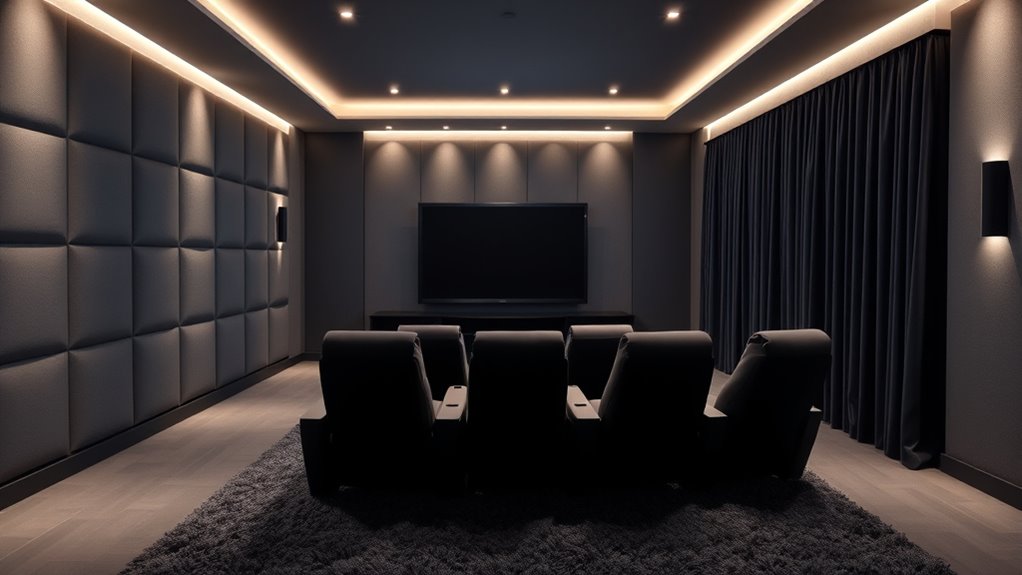
Are you tired of noise disturbances disrupting your peace? If you love late-night movies but hate the sound creeping into other rooms or disturbing neighbors, it’s time to contemplate advanced soundproofing methods. The key to creating a quiet, private space lies in understanding sound transmission and acoustic insulation. Sound transmission refers to how sound travels through walls, floors, and ceilings, making it essential to minimize these pathways to keep noise contained. Acoustic insulation acts as a barrier, absorbing sound waves and preventing them from passing through structures. By combining these elements effectively, you can enjoy your favorite films late into the night without worrying about sound leakage or external disturbances.
Create a quiet space by combining sound transmission control and acoustic insulation techniques.
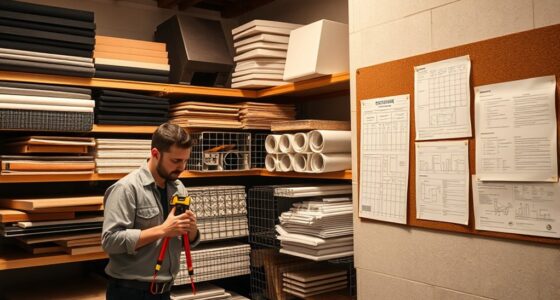
First, focus on reducing sound transmission by reinforcing your existing walls or installing new, specially designed partitions. Adding mass to your walls—such as dense drywall, mass-loaded vinyl, or additional layers of gypsum—can considerably block sound waves from passing through. These materials increase the wall’s density, making it harder for sound to traverse the barrier. Sealing gaps, cracks, and joints with acoustic sealant or weatherstripping is equally important, as even tiny openings can allow sound to leak out or in. For floors and ceilings, consider installing resilient channels or acoustic mats beneath the surface to absorb vibrations and prevent sound from traveling downward or upward.
Next, enhance acoustic insulation within your walls and ceilings. Materials like mineral wool, fiberglass batts, or cellulose insulation are excellent at absorbing sound energy, reducing the overall sound transmission. When properly installed, these insulations dampen sound waves before they can escape or enter a room. Combining insulation with a double-layer drywall system further boosts soundproofing capabilities, creating a more effective barrier against noise. Additionally, understanding soundproofing techniques can help you target specific problem areas more efficiently.
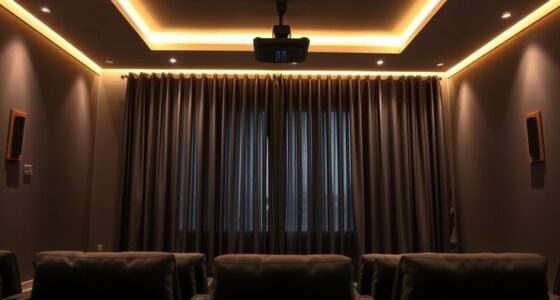
Don’t overlook the doors and windows, which are common weak points for sound leakage. Use weatherstripping around door frames and consider installing solid-core doors for better sound-blocking performance. For windows, double-glazing or specialized acoustic window inserts can dramatically reduce external noise infiltration. Heavy curtains or acoustic drapes can also help dampen sound reflections within your space, creating a more immersive viewing environment.

Olanglab Fiberglass Acoustic Wall Panels 4 Pack, 11.8'' x 23.6'' Sound Panels, Fabric Wrapped Sound Proof Panels for Walls (Black)
Thick Fiberglass Core: Olanglab acoustic panels features high density fabric covering that allows sound to pass through and...
As an affiliate, we earn on qualifying purchases.
Frequently Asked Questions
Can Soundproofing Materials Affect Indoor Air Quality?
Soundproofing materials can impact your indoor air quality, especially if they trap dust or off-gas chemicals. To maintain good air quality, you should incorporate proper ventilation strategies, like exhaust fans or air purifiers, alongside your soundproofing efforts. Regularly airing out your space helps reduce any potential buildup of indoor pollutants from these materials, ensuring your environment stays healthy and comfortable while enjoying your late-night movies.
How Long Does It Take to Install Advanced Soundproofing Systems?
You can expect the installation of advanced soundproofing systems to take anywhere from a few days to over a week, depending on project complexity. Studies show that proper project planning can reduce installation time by up to 30%. The timeline depends on factors like room size, material choice, and existing infrastructure. To guarantee a smooth process, prioritize detailed planning and consultation with professionals, setting realistic expectations for your project’s duration.
Are There Eco-Friendly Soundproofing Options Available?
Yes, eco-friendly soundproofing options are available. You can choose recyclable materials like recycled cotton or cellulose insulation, which use natural fibers for superior sound absorption. Natural insulation options, such as sheep’s wool or hemp, also provide effective soundproofing while being sustainable. These choices help you reduce your environmental impact, and they can be integrated into your space without sacrificing performance, making your home both quiet and eco-conscious.
What Is the Cost Range for High-End Soundproofing Solutions?
Like a fortress guarding your peace, high-end soundproofing costs typically range from $5,000 to $20,000. Your cost estimation depends on material selection, with premium options like mass-loaded vinyl, acoustic panels, and specialized drywall driving up expenses. Expect to pay more for custom installations and advanced insulation. While pricey, investing in quality materials guarantees you keep noise out and tranquility in, creating a perfect space for late-night movies.
How Effective Are Soundproofing Measures Against Low-Frequency Noises?
Soundproofing measures are quite effective against low-frequency noises, especially when you focus on bass attenuation and reducing structural resonance. You’ll notice a significant reduction in deep, rumbling sounds when you use specialized insulation and mass-loaded vinyl. Additionally, isolating walls and adding decoupling elements help minimize vibrations, making it harder for low-frequency noise to transmit through your space. This makes your late-night movie experience much more peaceful and enjoyable.

BooLooT Projector Screen 120 Inch Portable Movies Screens 16:9 Foldable Wrinkle-Resistant Fabric with Dual Adhesive/Nail Hooks for Stable Wall Mount, Ideal for Home Theater & Movie Nights (120 inches)
6 Size Options for All Spaces: Choose from 60/72/84/100/120/150-inch BooLooT Projection Screen sizes—perfect for compact bedrooms (60-inch), family...
As an affiliate, we earn on qualifying purchases.
Conclusion
Now that you’ve mastered soundproofing, you hold the key to your sanctuary. Like a fortress shielding your peace, your efforts create a haven where silence and quiet moments thrive. Every barrier you build is a promise to yourself — a silent vow to protect your nights and your peace. With this knowledge, you’re not just blocking noise; you’re crafting a refuge where tranquility reigns, and the world’s chaos cannot breach your walls.

KODAK Projector Screen | 100” Fixed Frame Home Projection Screen with Black Velvet Frame, Durable PVC & Wall Mount Kit | 160° View Angle, 16:9, 1.1, Full HD 4K 8K & Active 3D Ready for Movies & Gaming
KEEP YOUR PROJECTOR SCREEN ON STANDBY | No More Setup & Breakdown! The KODAK Fixed Position Projector Screen...
As an affiliate, we earn on qualifying purchases.

Art3dwallpanels 4 PCS Acoustic Panels, 24''x12'' Fabric Soundproof Wall Panels, Easy-Hook Mounting Sound Absorbing Panels for Studios, Office, Home Theater,Dark Grey
Install Firmly: Securely mount with hooks & screws—no weak adhesives! Adjust freely without restrictions. Ideal for textured surfaces...
As an affiliate, we earn on qualifying purchases.