When choosing a projector for easy viewing, focus on brightness, measured in lumens, to match your environment; higher lumens work well in well-lit spaces, while lower ones suit dark rooms. Also, consider the throw ratio, which determines how close the projector needs to be to produce your desired image size. Combining the right brightness and throw ratio creates a comfortable, clear experience. Keep reading to get a deeper understanding of these important specs.
Key Takeaways
- Understand lumens to select the right brightness for your room’s lighting conditions.
- Consider throw ratio to ensure the projected image fits your space and setup needs.
- Higher lumens improve readability in well-lit environments, while lower lumens suit dark rooms.
- Match the throw ratio to your room size for optimal image size and minimal distortion.
- Balance brightness and throw ratio for comfortable reading with clear, sharp images at suitable distances.
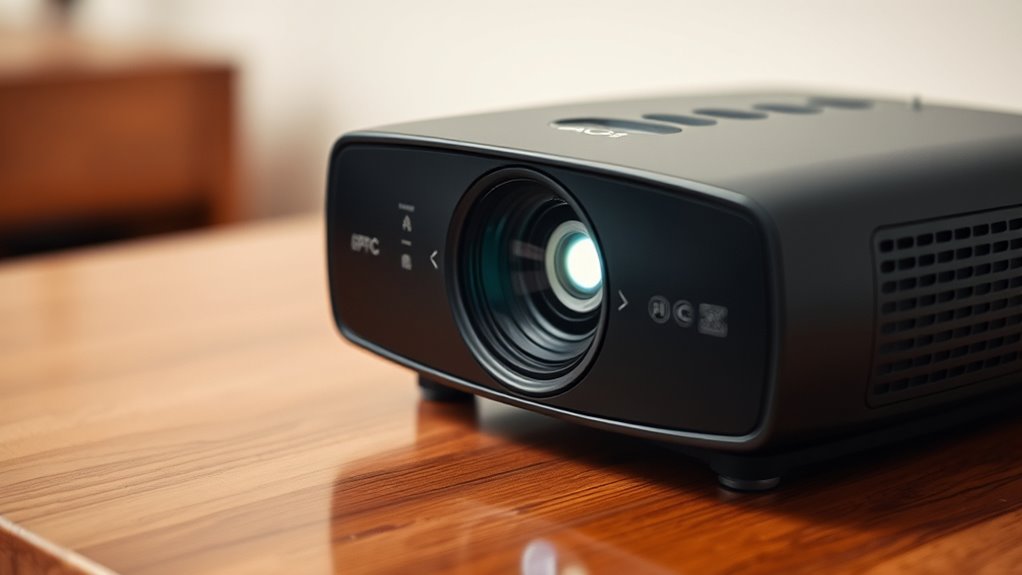
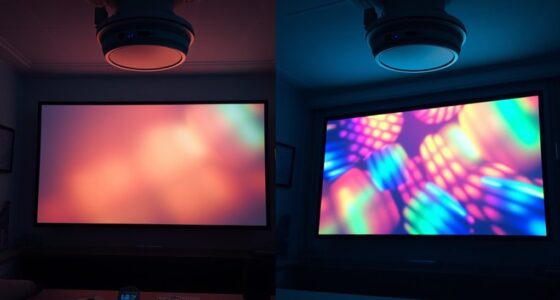
When choosing a reading projector, understanding its specifications is essential for guaranteeing it meets your needs. Two critical factors to consider are brightness levels and throw ratio. Brightness levels, measured in lumens, determine how well the projector can display images in various lighting conditions. If you plan to use your projector in a well-lit room or during daytime, you’ll want a higher lumen count to ensure the text remains clear and easily readable. Conversely, if you mostly use it in darker environments, a lower brightness level might suffice, which can also help reduce power consumption and prolong the device’s lifespan. Keep in mind that too high a brightness in a dim setting can cause eye strain, so balancing lumens with your typical usage environment is key. Regularly reviewing the projector bulb maintenance guidelines can also help ensure consistent brightness and performance over time.
The throw ratio, on the other hand, influences how close the projector needs to be to the screen or wall to produce a certain image size. It’s expressed as a ratio, such as 1.2:1, meaning that for every foot of image width, the projector must be placed about 1.2 feet away from the surface. A smaller throw ratio allows you to position the projector closer to the screen, which is ideal if space is limited or if you want a larger image in a small room. On the other hand, a larger throw ratio means the projector needs more distance to produce the same image size, making it suitable for larger conference rooms or auditoriums. When selecting a reading projector, consider your available space and the size of the images you want to project. If your room is small, look for a projector with a short or ultra-short throw ratio to avoid shadows and clutter.
Both brightness levels and throw ratio are interconnected in creating a comfortable reading experience. A projector with adequate brightness ensures the text remains sharp and legible without washing out in ambient light, while the right throw ratio ensures that the image fits well in your space without distortion or the need for excessive adjustment. By paying close attention to these specifications, you can choose a projector that not only matches your environment but also enhances your reading experience. Remember, the goal is to find a device that offers clear, crisp images at a comfortable size and distance, making your reading sessions more enjoyable and less straining on your eyes.
Frequently Asked Questions
How Do I Compare Projector Brightness Across Different Models?
To compare projector brightness, look at the lumens measurement, which indicates how bright the projector is. Higher lumens mean a brighter image, suitable for well-lit rooms. Also, check brightness uniformity to guarantee consistent brightness across the screen, avoiding dim areas. Consider your room’s lighting conditions and screen size when choosing a model. Comparing these specs helps you select a projector that delivers clear, vibrant images for your needs.
What Is the Ideal Resolution for Home Theater Projectors?
For your home theater, aim for at least 1080p resolution to enjoy sharp, detailed images on your screen. If you have a larger screen size and a longer throw distance, consider a 4K projector for even better clarity and immersion. Keep in mind that higher resolution works best with proper screen size and throw distance, ensuring your images are crisp without pixelation, making your movie nights truly cinematic.
How Does Projector Contrast Ratio Affect Image Quality?
Think of contrast ratio as the heartbeat of your projector’s image. A higher contrast ratio means deeper blacks and brighter whites, which elevates image clarity and makes details pop. When contrast ratio is low, images appear dull and washed out, like a faded painting. So, it’s essential for immersive viewing. You’ll notice sharper, more vivid visuals, enhancing your overall experience and bringing your movies and presentations to life.
Are There Specific Specs to Prioritize for Outdoor Use?
For outdoor use, prioritize weather resistance and lens durability. You want a projector that can withstand rain, humidity, and dust, so look for models with high IP ratings. Additionally, choose a projector with a sturdy, durable lens to prevent damage from environmental elements or accidental bumps. These specs guarantee your outdoor setup remains functional and delivers clear images, even in challenging weather conditions.
What Are the Maintenance Requirements for Long-Term Projector Use?
Did you know that most projector lamps last between 1,500 and 3,000 hours? To guarantee long-term use, you should regularly clean and dust the projector to prevent overheating and maintain image quality. Keep an eye on the projector lamp lifespan; replacing it at the right time prolongs device life. Consistent maintenance, including gentle cleaning and proper ventilation, helps you get the most out of your projector over years.
Conclusion
Understanding projector specs might seem complex at first, but it’s all about knowing what to look for to match your needs. While some claim higher lumens always mean a better picture, real-world tests show environment and screen quality matter just as much. By learning to interpret specs critically, you guarantee your projector choice truly enhances your viewing experience. With a bit of research, you’ll see that choosing the right projector is less about specs alone and more about how they work together.