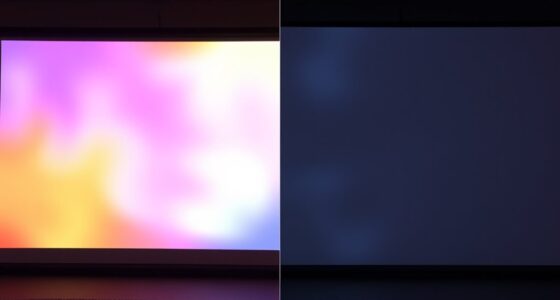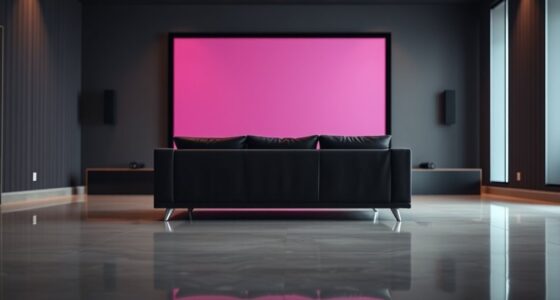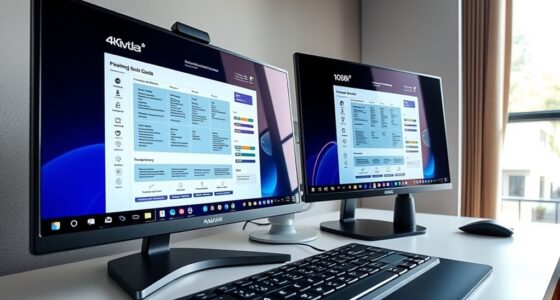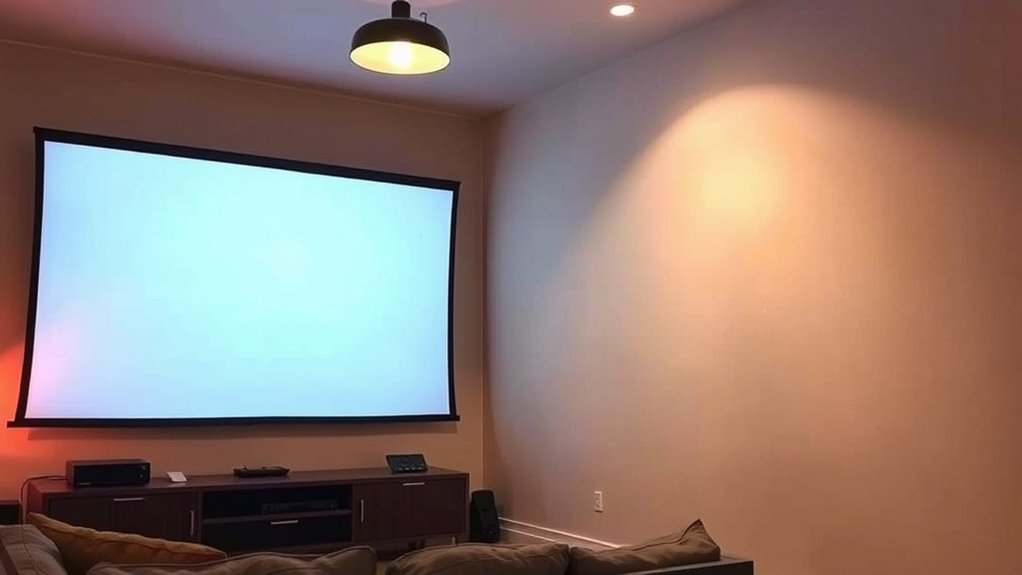

Choosing between a projector screen and a plain wall depends on your budget, space, and picture quality goals. A wall is free and easy to use but may have imperfections that affect image clarity. A dedicated screen offers a cleaner, more professional look with better contrast and color accuracy, but costs more and requires installation. If you want ideal image quality and a polished setup, a screen makes sense—keep exploring to see what suits you best.
Key Takeaways
- Using a plain wall is cost-effective but may compromise image quality due to surface imperfections and color issues.
- Dedicated projector screens offer a uniform surface that enhances contrast, clarity, and overall viewing experience.
- Walls are easier to set up, while screens require mounting and adjustments, affecting convenience and flexibility.
- Screen options provide size and format flexibility, improving immersion compared to fixed wall surfaces.
- Aesthetically, screens look cleaner and more professional, minimizing distractions for a better viewing environment.
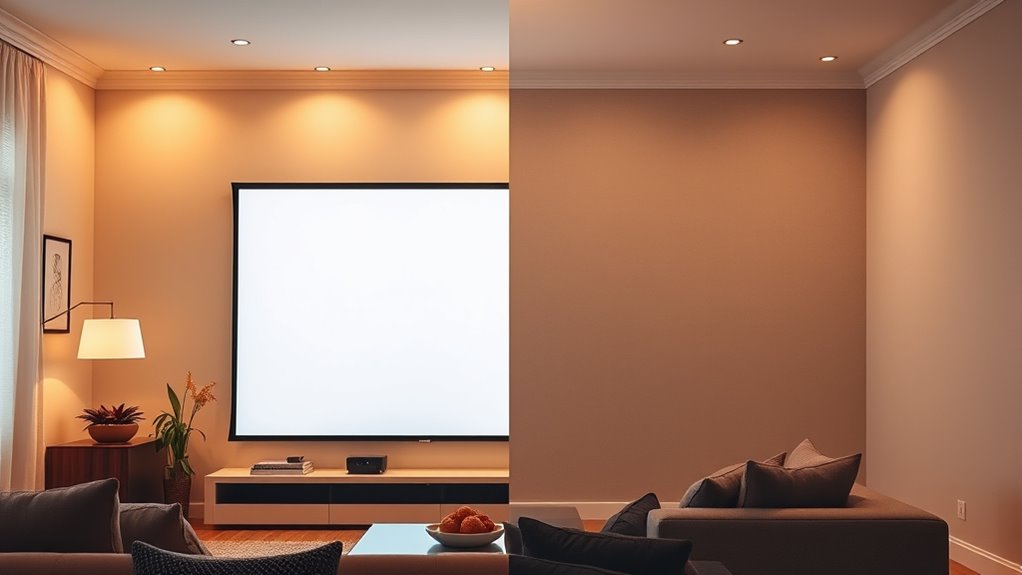
When it comes to setting up a home theater or presentation space, choosing between a projector screen and a plain wall is a decision that can markedly impact your viewing experience. One of the first considerations is the cost comparison. A plain wall is essentially free—if you already have a suitable surface, you won’t need to spend extra money. In contrast, projector screens range from affordable models to high-end options, with prices reflecting size, material quality, and features like gain or portability. While a basic screen might cost under $100, larger or specialized screens can run several hundred dollars or more. You’ll need to weigh whether the improved picture quality, contrast, and color accuracy offered by a dedicated screen justify the additional expense.
Installation convenience is another significant factor. Setting up a plain wall is often straightforward—just ensure the surface is smooth, clean, and free of distractions. You can project directly onto it without any additional setup, making it incredibly quick and hassle-free. However, walls may have imperfections, textures, or colors that can distort the image or affect color accuracy. If your wall isn’t ideal, you might consider painting it with special projector paint or using a neutral-colored, smooth surface. On the other hand, installing a projector screen involves more effort. You’ll need to mount it securely, ensure it’s properly aligned, and sometimes deal with brackets or stands. Portable screens are easier to set up but may not provide the same stability or image quality as fixed models. Despite the extra effort, a dedicated screen ensures a uniform surface that can significantly enhance image clarity and contrast.
Furthermore, with a plain wall, you’re limited to a fixed size unless you paint or modify the surface, which can be cumbersome. A projector screen, however, often comes in adjustable sizes or formats, giving you flexibility to tailor the viewing experience. While installation of a screen might seem more involved initially, once in place, it offers a cleaner, more professional appearance that minimizes distractions and maximizes image quality. Additionally, a proper screen surface can help optimize color accuracy and contrast ratios, leading to a more immersive viewing experience.
projector screen for home theater
As an affiliate, we earn on qualifying purchases.
As an affiliate, we earn on qualifying purchases.
Frequently Asked Questions
How Do Projector Screens Affect Image Quality?
Projector screens considerably improve image clarity and color accuracy by providing a smooth, reflective surface that minimizes distortions. When you use a quality screen, you’ll notice sharper details and more vibrant colors, making your viewing experience much better. A plain wall can cause uneven reflections and duller images. So, if you want the best picture quality, investing in a good projector screen is definitely worth it, ensuring you get crisp, colorful images every time.
What Are the Cost Differences Between Screens and Walls?
You’ll find that projector screens typically cost more upfront than plain walls, mainly due to installation costs and higher-quality materials. Screens often require professional setup, which adds to installation expenses. Maintenance expenses are usually lower since screens are designed for durability, but plain walls might need repainting or cleaning over time. If you want a long-term, high-quality setup, investing in a screen could save you repair and upkeep costs down the line.
Can a Plain Wall Be Suitable for Professional Presentations?
A plain wall can be suitable for professional presentations if the wall has a smooth texture and high color contrast, which helps the projected image stay sharp and clear. However, rough textures or similar colors to the projection can distort images or reduce visibility. Test your wall beforehand to guarantee it provides enough clarity. For consistent quality, a dedicated screen often outperforms a plain wall, especially in bright or high-stakes settings.
How Does Room Lighting Impact Screen Versus Wall Viewing?
Room lighting considerably affects your viewing experience on a screen versus a plain wall. Bright ambient lighting causes glare and washes out the image, making it harder to see details on a wall. A projector screen with glare reduction features helps maintain image clarity even with ambient light. To get the best picture quality, you should control ambient lighting and choose a screen designed to reduce glare, ensuring your presentation remains sharp and visible.
Are There Portable Options for Projector Screens?
Absolutely, there are plenty of portable options for projector screens that suit your mobility needs. You can choose foldable or retractable screens that are lightweight and easy to carry, making setup a breeze. These mobility solutions let you enjoy a big-screen experience anywhere, whether indoors or outdoors. Don’t let inflexible equipment hold you back—embrace the freedom of portable screens and take your entertainment on the go.
portable projector screen
As an affiliate, we earn on qualifying purchases.
As an affiliate, we earn on qualifying purchases.
Conclusion
So, now that you’ve seen the differences, the choice isn’t just about what’s easier or cheaper. It’s about what will truly transform your viewing experience. Will you settle for the plain wall, or will you invest in a projector screen that could change your movie nights forever? The decision is in your hands—are you ready to elevate your space, or will you risk missing out on that perfect, immersive moment? The choice is yours.
fixed wall projector screen
As an affiliate, we earn on qualifying purchases.
As an affiliate, we earn on qualifying purchases.
projector screen with adjustable size
As an affiliate, we earn on qualifying purchases.
As an affiliate, we earn on qualifying purchases.