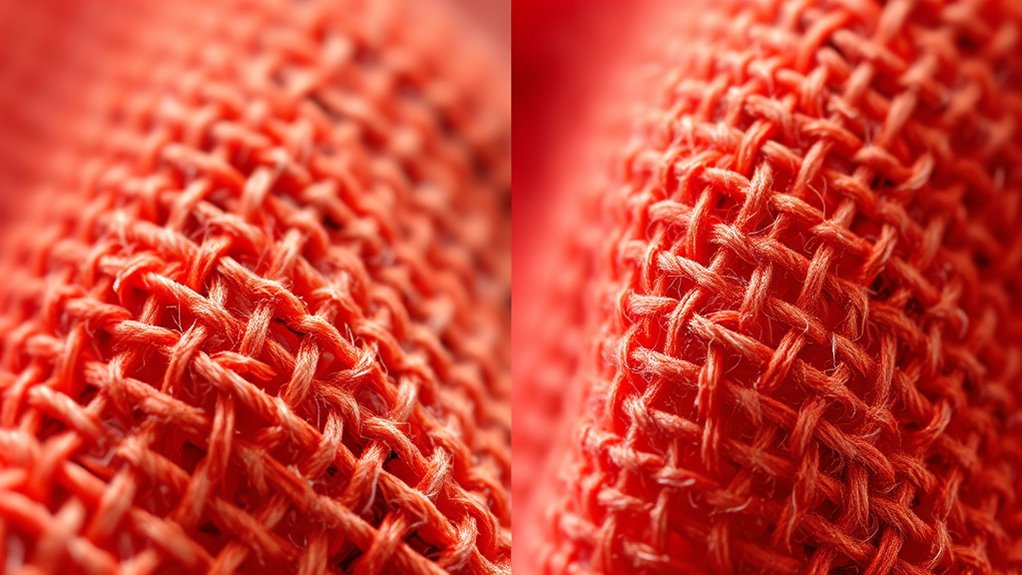

Native resolution is the original pixel size at which your content was created, offering sharp, clear images without distortion. Upscaled resolution improves lower-quality images by analyzing and filling in missing details, making them look closer to native. While native resolution provides the best clarity and color accuracy, upscaling can enhance images on lower-resolution screens, though sometimes with softer details. Want to find out which choice suits your setup? Keep exploring to discover more details.
Key Takeaways
- Native resolution displays content at the original pixel dimensions, ensuring sharpness and accurate detail.
- Upscaled resolution uses algorithms to enhance lower-resolution images, aiming for near-native clarity but may introduce artifacts.
- Native resolution offers better image fidelity, sharper edges, and richer colors compared to upscaled images.
- Upscaling can improve visual quality on lower-resolution sources or larger screens but may soften details and cause artifacts.
- Choosing between them depends on device capabilities, content quality, and viewing preferences for clarity versus flexibility.
LG 27US500-W Ultrafine Monitor 27-Inch 4K UHD (3840×2160) HDR10 IPS Borderless Design Reader Mode Flicker Safe Switch App HDMI DisplayPort – White
4K UHD with 1000:1 Contrast Ratio – This UltraFine display with a 1000:1 contrast ratio displays deeper blacks…
As an affiliate, we earn on qualifying purchases.
As an affiliate, we earn on qualifying purchases.
Defining Native and Upscaled Resolutions
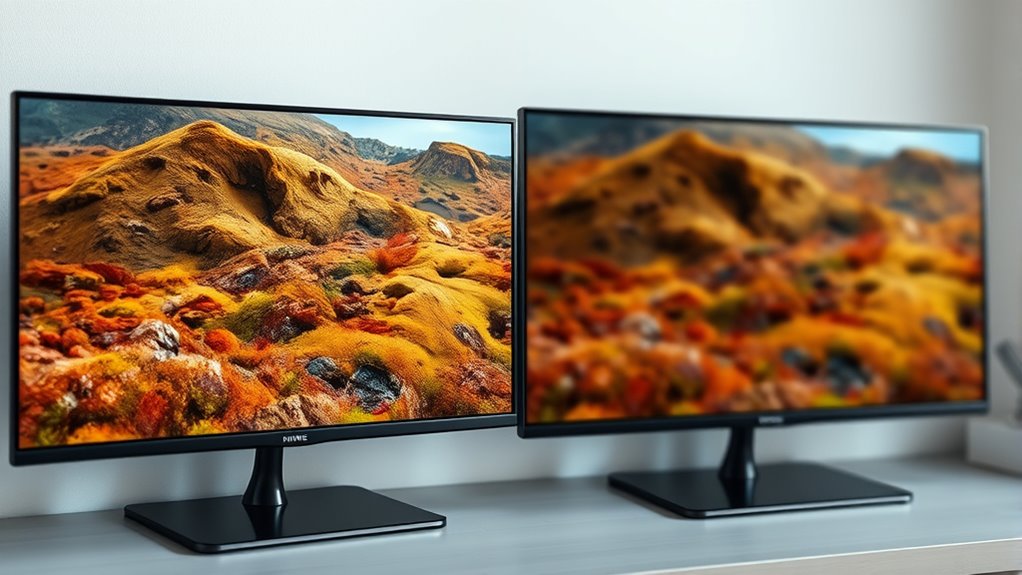
Native resolution refers to the original pixel dimensions at which a display or content was created, ensuring the image is displayed exactly as intended without any modifications. This resolution aligns with the display’s screen aspect ratio, which determines the proportional relationship between width and height. When your device is properly calibrated for display calibration, it can accurately render the native resolution, preserving image clarity and detail. Understanding your device’s native resolution helps you optimize your viewing experience by maintaining proper aspect ratios and ensuring images are displayed accurately without distortion or loss of quality. Additionally, linguistic variations of resolution terminology can influence how users perceive and describe display quality across different regions.

MINIX U8K-Ultra 8K Android Media Player with AI Picture Quality Enhancer & AI Resolution Upscaling 8GB RAM 128GB eMMC, Powered by AOSP 11 (Non-Android TV), Dolby Vision and Dolby Atmos Certified
Android AOSP 11 & Amlogic S928X-K: MINIX U8K-ULTRA Smart Media Player powered by the Amlogic S928X-K big.LITTLE ARM…
As an affiliate, we earn on qualifying purchases.
As an affiliate, we earn on qualifying purchases.
How Native Resolution Affects Image Quality

When you view images at their native resolution, you notice sharper details and clearer edges that enhance overall image quality. Your colors appear more accurate and richer, adding depth and realism to the picture. With native resolution, each pixel contributes precisely to the image, ensuring fine details are preserved and crisp. Understanding the importance of resolution quality helps you appreciate how detailed visuals are maintained without distortion.
Sharpness and Clarity
Higher native resolution typically results in sharper and clearer images because it provides more detail and finer pixel granularity. This increased detail enhances overall image clarity, making objects appear more defined and realistic. When resolution is native, colors tend to be more accurate, reducing blurriness that can distort hues and degrade color fidelity. This improves your viewing comfort, as images are easier to interpret without strain. Sharpness is directly tied to the pixel density; the higher the resolution, the crisper the edges and fine details become. Conversely, upscaled images may seem less sharp and slightly softer, which can diminish clarity and make details less distinct. For the best image quality, native resolution helps maintain true-to-life sharpness and clarity. Additionally, resolution quality plays a crucial role in overall image fidelity, reinforcing how native resolution preserves the integrity of the visual experience.
Color Fidelity and Depth
Because it captures more detailed color information, native resolution substantially enhances color fidelity and depth in images. With higher resolution, you’ll notice richer color saturation, making reds, blues, and greens appear more vibrant and true to life. This accuracy boosts overall image realism, giving a sense of depth perception that upscaled images often lack. When viewing native resolution content, subtle color gradations become more apparent, allowing for smoother shifts and more nuanced visuals. The increased pixel density ensures that colors stay consistent across different areas of the screen, preventing muddiness or oversaturation. As a result, your viewing experience feels more immersive, with colors and depth working together to produce a sharper, more lifelike image. Native resolution truly elevates the quality of color and perception of depth.
Pixel Precision and Detail
Native resolution substantially enhances pixel precision and detail by providing every image element in its original, unaltered form. This guarantees superior pixel accuracy, allowing each detail to shine with clarity. When you view content at native resolution, you experience sharper edges, finer textures, and more accurate color progressions. This level of detail preservation immerses you fully, making images feel more lifelike and vibrant. You’ll notice the difference in small text, intricate patterns, and subtle shading, which upscaled images often lose. The emotional impact is undeniable—crisp visuals bring scenes to life and deepen your engagement. Additionally, image quality is significantly improved at native resolution, ensuring that visual elements are presented as intended by creators.
- Experience stunning clarity that captivates your senses
- Observe every tiny detail with precision
- Feel immersed in realistic, vibrant visuals
- Notice sharper edges and textures
- Enjoy a more authentic viewing experience

Calibrite Display Pro HL Monitor Calibration Colorimeter for LCD Mini LED and OLED Displays, Measure up to 3000 Nits, PROFILER Software, USB C with Adapter, Validation/Color Uniformity Tools
SPECIFICATIONS: HL high luminance sensor colorimeter measures up to 3000 nits, calibrates and profiles LCD mini LED OLED…
As an affiliate, we earn on qualifying purchases.
As an affiliate, we earn on qualifying purchases.
The Process of Upscaling and Its Technology
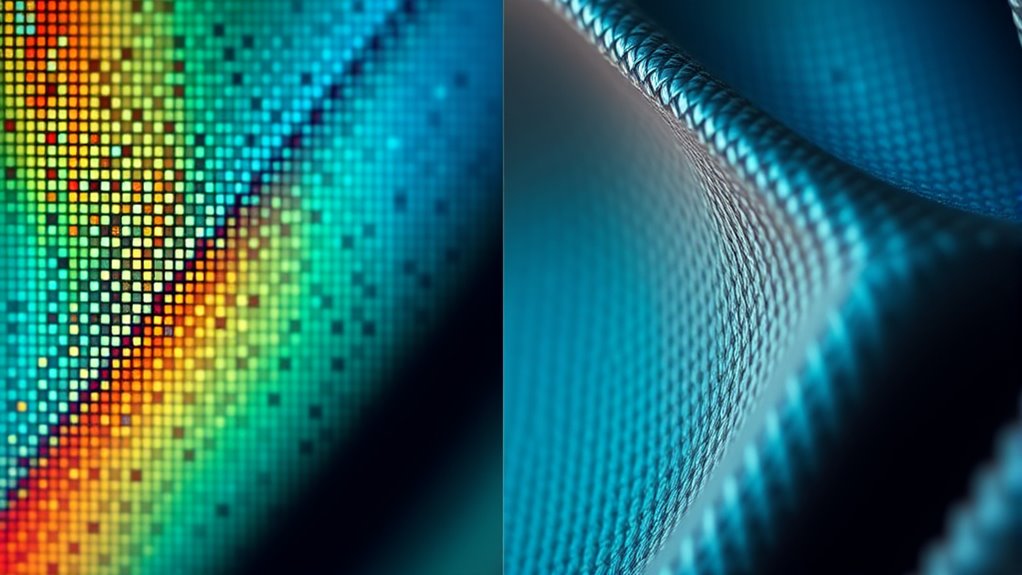
Upscaling algorithms analyze lower-resolution images and fill in missing details to create a sharper, higher-resolution picture. Hardware and software work together to process these algorithms quickly and efficiently, enhancing your viewing experience. Understanding how these technologies operate helps you appreciate the quality differences in upscaled content. Additionally, emotional support plays a vital role in helping individuals adapt to changes in media quality and technology.
Upscaling Algorithms Explained
Understanding how upscaling algorithms work involves exploring the technology that enhances lower-resolution images or videos to higher resolutions. These algorithms analyze pixel data to fill in missing details, often improving clarity but risking issues like compression artifacts or distortion of the aspect ratio. They use complex mathematical models to predict and interpolate new pixels, aiming for a seamless, sharp image. Additionally, Kia Tuning techniques can be applied to optimize visual presentation, ensuring that the upscaled images retain their original quality and appeal.
Consider how these processes evoke feelings of anticipation, hope, or disappointment depending on the result. With effective algorithms, you experience:
- Stunning clarity that feels almost real
- Smooth, natural progressions without distortion
- Preservation of original aspect ratios
- Minimized compression artifacts
- Enhanced visual immersion
These innovations empower you to enjoy higher-quality visuals, even from older or lower-resolution sources.
Hardware and Software Roles
The process of enhancing image quality relies heavily on both hardware components and software algorithms working together seamlessly. Your GPU and display hardware must support upscaling features for superior gaming performance. Modern graphics cards come with dedicated upscaling hardware, ensuring smoother visuals and reducing lag. Software algorithms, like DLSS or FSR, process lower-resolution images to improve clarity and detail, making upscaled content look almost native. Hardware compatibility is essential; if your system lacks the necessary components, upscaling won’t be effective, and gaming performance may suffer. Efficient collaboration between hardware and software allows for better frame rates and sharper images, giving you a more immersive gaming experience. Additionally, understanding the compatibility requirements of your system can help you maximize upscaling benefits without compromising performance. Ultimately, understanding these roles helps you maximize upscaling benefits without compromising performance.
HAPPRUN Native 1080P Bluetooth Mini Projector, Full HD Portable Outdoor Movie Projector with Built-in Speaker, Compatible with Smartphone, HDMI, USB, AV, Fire Stick, PS5 for Home, Bedroom, Outdoor Use
[ Native 1080P Full HD Resolution ] – Enjoy crystal-clear visuals with HAPPRUN H1's native 1920×1080 resolution, delivering…
As an affiliate, we earn on qualifying purchases.
As an affiliate, we earn on qualifying purchases.
Advantages and Disadvantages of Native Resolution

Choosing native resolution offers the clearest and most detailed image quality because it displays content exactly as it was originally created. However, it can reveal compression artifacts more prominently, diminishing visual purity. Native resolution demands higher power consumption, which may impact device battery life and increase energy costs. You might also face limited flexibility, as content not matching your display’s native resolution can appear less sharp or require scaling. Additionally, native screens often need more advanced hardware to handle the high detail, raising costs. On the positive side, you’ll enjoy crisp images free from distortion. But be aware: reliance on native resolution can lead to frustration when dealing with compressed files or lower-quality sources. It’s a trade-off between ultimate clarity and potential limitations in versatility. Understanding display technology can help you make better choices for your specific needs.
When Upscaling Can Enhance Your Viewing Experience

Have you ever watched a lower-resolution video and wondered if upscaling could make it look better? If your screen size is large or your viewing distance is close, upscaling can considerably improve image clarity. When you’re near a big screen, native resolution might reveal pixelation or blurriness, but upscaling can smooth out details and enhance sharpness. This process fills in missing data, making the picture appear more detailed without needing a higher native resolution. Upscaling works best when your screen size is substantial and you sit relatively close, ensuring you notice the improved clarity. It’s a way to enjoy better image quality without investing in a new display, especially if your current device can benefit from software enhancement. Additionally, understanding how resolution impacts image quality can help you make more informed viewing choices.
Factors to Consider When Choosing Resolution Settings
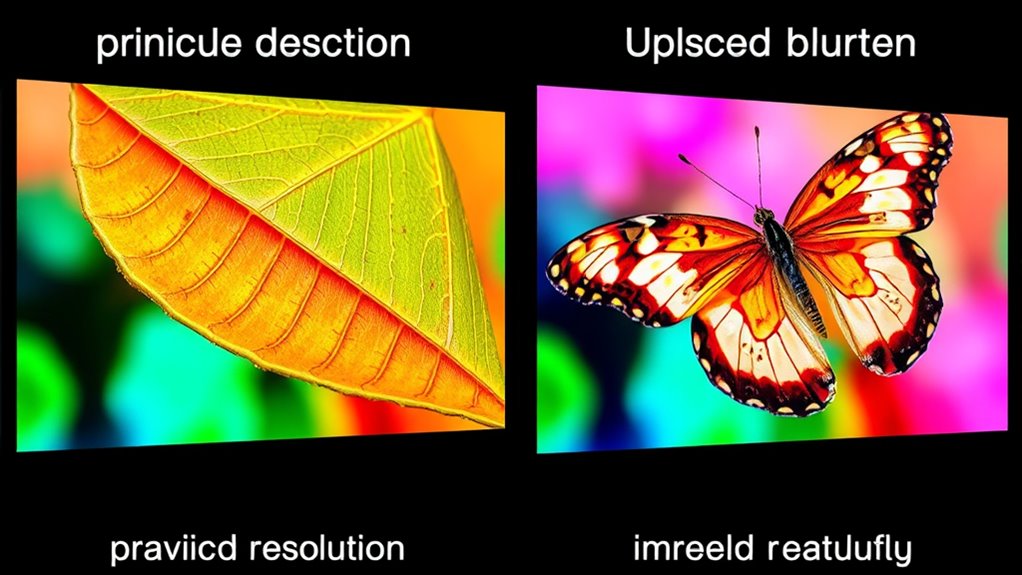
When selecting resolution settings, you need to balance image quality with your device’s capabilities and your viewing environment. High resolutions boost visual detail but can strain hardware, affecting video game optimization and streaming quality. Consider your screen size and distance—larger screens benefit from higher resolutions. If your device struggles, upscaling may cause lag or blurriness, diminishing your experience. Think about your internet connection’s stability if streaming, as higher resolutions demand more bandwidth. Adjusting resolution can either enhance immersion or hinder performance.
- Feel the thrill of sharp, detailed graphics during gameplay
- Experience smoother streaming with optimized settings
- Avoid frustration from lag or pixelation
- Maximize your device’s potential
- Create a mesmerizing viewing experience that keeps you hooked
Frequently Asked Questions
How Does Resolution Impact Gaming Performance and Frame Rates?
When you choose higher resolutions, you might see better visuals, but it can also influence gaming performance and frame rates. The resolution trade-offs mean that demanding settings require more from your hardware, potentially causing lag or stuttering. Lower resolutions improve performance but reduce image clarity. Confirm your hardware compatibility matches your preferred resolution to enjoy smooth gameplay without sacrificing too much visual quality.
Can Upscaling Cause Input Lag or Delays in Gameplay?
Upscaling can cause input delay and visual artifacts, making gameplay feel less responsive. You might notice a slight lag between your actions and on-screen reactions, especially if the upscaling process takes extra time. This delay can impact your precision and timing. Additionally, visual artifacts like blurriness or ghosting may appear, reducing overall clarity. To minimize these issues, choose a high-quality upscaling method or stick to native resolution when responsiveness is critical.
Are There Specific Content Types That Benefit Most From Native Resolution?
You’ll notice that detailed content like high-resolution photography, detailed artwork, or text-heavy documents benefit most from native resolution. It offers better content clarity and visual detail, making every element sharp and clear. If you’re editing images or viewing fine text, native resolution guarantees you see the true quality without any blurring or loss of detail that upscaling might cause. For the best clarity, stick with native resolution for these content types.
How Do Different Display Technologies Influence Perceived Resolution Quality?
Ever wonder how your display technology shapes what you see? Different display types, like OLED or LCD, dramatically influence perceived resolution quality. You can enhance this by proper display calibration and ensuring color accuracy, which makes images appear sharper and more vibrant. These factors make your viewing experience feel more real and immersive, turning ordinary resolution into a stunning visual feast. So, choosing the right display technology truly elevates your viewing pleasure.
What Future Advancements Might Improve Upscaling Accuracy and Effectiveness?
Future advancements will likely improve upscaling accuracy and effectiveness through AI enhancement and hardware innovations. You’ll see smarter algorithms that analyze images more precisely, filling in details seamlessly. Hardware innovations, like faster processors and dedicated AI chips, will enable real-time, high-quality upscaling. These developments will make upscaled images look more natural and sharp, enhancing your viewing experience across various devices and content types.
Conclusion
Choosing between native and upscaled resolution is like selecting a clear glass or a frosted one—you’ll see the details differently. While native resolution offers a pure, unfiltered view, upscaling can brighten the scene, making it feel more vibrant. Think of your screen as a window—sometimes, a little enhancement lets you see the world more vividly. Ultimately, your choice shapes your visual journey, turning a simple view into an immersive experience.