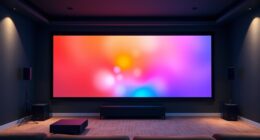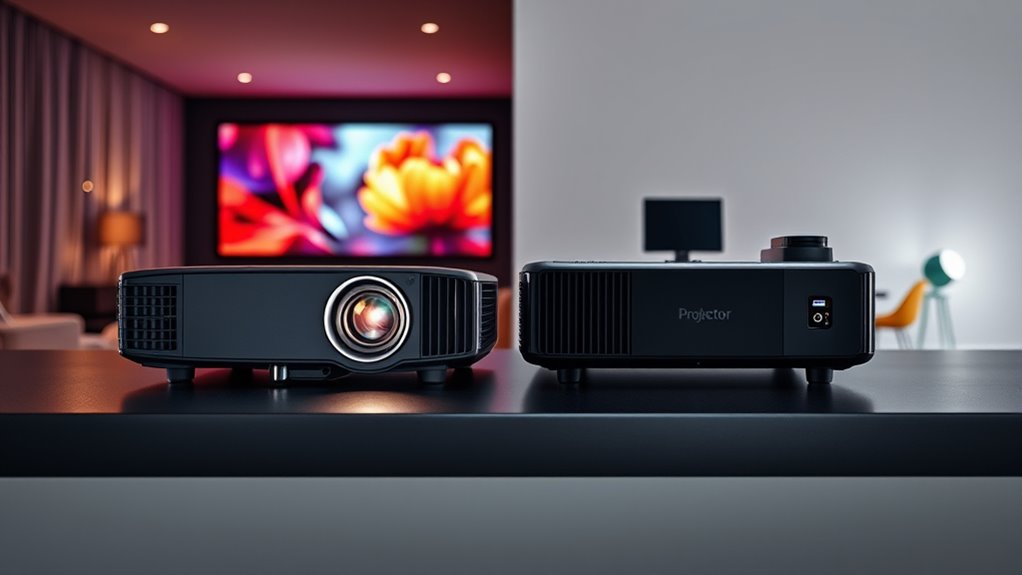

Home theater projectors are designed for immersive cinematic experiences, offering high resolution, vibrant colors, and better contrast for dark room viewing. Office projectors prioritize portability, quick setup, and clear images in well-lit environments, often with lower resolution and brightness. If you’re looking for a home theater, focus on image quality and cinematic features. For presentations and mobility, an office projector suits your needs. Keep exploring to discover which option best fits your space and lifestyle.
Key Takeaways
- Home theater projectors prioritize high resolution, contrast, and color accuracy for cinematic experiences, while office projectors focus on portability and quick setup.
- Brightness levels (lumens) are higher in office projectors to ensure clear images in well-lit environments; home projectors optimize for darker rooms.
- Home models tend to be larger and less portable, whereas office projectors are lightweight and designed for easy transportation.
- Connectivity features in office projectors emphasize versatility and ease of use for presentations, while home projectors focus on image quality and multimedia support.
- The environment influences projector choice: dark rooms suit home theater models, while bright, flexible spaces benefit from office projectors’ brightness and setup features.

Choosing the right projector depends on whether you want to create a cinematic home theater or support professional presentations in the office. If you’re aiming for a home theater setup, image quality is essential. You want vibrant colors, sharp details, and a high contrast ratio that makes movies feel immersive. Look for projectors with high lumen ratings for bright images even in less-than-dark rooms, and pay attention to resolution—ideally 4K—to guarantee every scene is crisp and lifelike. Portability might not be your top concern here, as you’ll likely keep the projector in one spot, but it’s worth considering if you want to move the setup around or take it to friends’ houses. Larger, more powerful home theater projectors tend to be bulkier, but compact models are available if space is limited.
In contrast, office projectors prioritize portability and ease of setup, especially if you need to move them between conference rooms or take them on the go. These projectors are designed to be lightweight and compact so they can fit into a bag or briefcase without hassle. Portability doesn’t mean sacrificing image quality entirely, but it does mean that the device might have slightly lower lumen output or resolution compared to dedicated home theater models. Still, a good office projector will deliver clear, bright images suitable for presentations, spreadsheets, and video calls, even in well-lit rooms. The ability to quickly set up and dismantle the projector is vital, so look for models with simple connection options and keystone correction features that help you quickly align the image. Additionally, understanding the contrast ratio helps determine how well the projector can render images in different lighting conditions.
When evaluating projectors for either purpose, consider how much space you have and how you’ll use the device. For home theaters, bigger screens and higher resolutions deliver the cinematic experience, so prioritize image quality over portability. For office use, lightweight, portable options with adequate brightness and good connectivity get the job done efficiently without fuss. Ultimately, your choice hinges on balancing image quality and portability based on your specific needs. If you’re creating a dedicated home theater, invest in a high-quality, less portable model. If you need a versatile device for frequent moves and multiple locations, opt for a lightweight, portable projector with sufficient brightness and resolution to handle professional tasks.
Frequently Asked Questions
Can a Home Theater Projector Be Used for Business Presentations?
Yes, you can use a home theater projector for business presentations. It offers a large screen size that makes your visuals more engaging and easier to see. However, keep in mind that image quality might not be as sharp or bright as an office projector, especially in well-lit rooms. If your presentation relies on detailed visuals or needs high brightness, check if the home theater projector meets those requirements first.
What Is the Typical Lifespan of Each Type of Projector?
Ironically, your home theater projector often outlives its office counterpart, thanks to better durability and careful usage. Typically, a home theater projector lasts around 8-10 years, while an office projector may only reach 5-7 years due to heavy daily use. So, if longevity’s your goal, you might prefer the longer lifespan of a home theater model. The lifespan comparison highlights how intended use impacts projector durability over time.
Are There Specific Maintenance Requirements for Home Theater Projectors?
You should follow a regular maintenance schedule for your home theater projector, including cleaning the air filters and lens to keep it running smoothly. Typically, clean the filters every 3-6 months and dust the lens gently with a soft cloth. Also, check for any signs of overheating or dust buildup, and replace the lamp as recommended by the manufacturer to prolong its lifespan and guarantee the best picture quality.
How Do Projectors Handle Different Lighting Environments?
You’ll find that projectors handle different lighting environments by their ability to adjust for ambient light, which directly impacts projection quality. For bright rooms, look for a projector with high lumens to maintain clear images. In darker settings, lower lumens work fine, and contrast becomes more noticeable. Always consider how ambient light levels might affect your viewing, so you can choose a projector that delivers ideal projection quality for your environment.
Is It Cost-Effective to Upgrade From an Office to a Home Theater Projector?
Upgrading from an office to a home theater projector isn’t always cost-effective. Think of it like switching from a bike to a sports car—if your budget’s tight, the added features and installation complexity might outweigh the benefits. While a home theater projector offers better image quality for movies, consider your needs and budget considerations carefully before making the leap. Sometimes, enhancing your current setup can deliver great results without the hefty price tag.
Conclusion
Ultimately, choosing between a home theater and an office projector depends on your needs. If you want a cinematic experience, go for a home theater projector; for presentations, an office projector works best. Remember, “The proof of the pudding is in the eating,” so pick the one that best fits your lifestyle. When you choose wisely, you’ll enjoy clear visuals and a seamless experience, no matter where you use it.