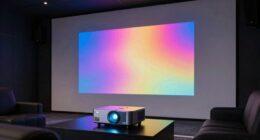
To reduce DLP color artifacts, focus on syncing your projector’s color channels precisely, much like how a rainbow’s colors blend seamlessly. Upgrading hardware components such as faster color wheels and high-quality color filters can make a big difference. Additionally, employing advanced software algorithms helps fine-tune color alignment and minimize halos or fringes around bright objects. By applying these steps, you can achieve clearer, more vibrant images—if you want to uncover more tips, keep exploring further.
Key Takeaways
- Synchronize color wheel speed with image refresh rates to minimize color misalignment and artifacts.
- Use high-quality, fast-spinning color wheels to improve color separation and reduce halos.
- Implement advanced digital algorithms for real-time color correction and channel calibration.
- Upgrade projector hardware with precise timing controls to enhance color channel synchronization.
- Regularly maintain and calibrate projector components to prevent misalignments causing rainbow effects.
Have you ever wondered why rainbows appear after a storm? It’s a natural phenomenon that captures your attention because of the vibrant array of colors spreading across the sky. But behind the beauty of rainbows lies a fascinating interplay of light and water, much like what you experience when watching a colorful image on a projector. When you look at a rainbow, your mind interprets the different wavelengths of light as distinct colors—a process known as color perception. This same principle applies to modern display technology, especially projectors, where precise control over light and color is essential to produce a vivid, accurate image.
In projector technology, the challenge of replicating the rich spectrum of colors involves managing how light is processed and emitted. Projectors use tiny light sources, such as LEDs or lasers, combined with color filters or separate color channels, to create images. However, one of the persistent issues in digital light processing (DLP) projectors is the occurrence of color artifacts—unwanted visual effects that can distort the image. These artifacts often manifest as fringes or halos around bright objects, which are somewhat akin to the subtle color separations seen in a rainbow. This happens because the projector’s color wheel or digital processing sometimes causes slight misalignments or timing differences in how each color is displayed, affecting the overall color perception. Additionally, AI-driven algorithms are increasingly utilized to improve color accuracy and reduce such artifacts.
Understanding this connection helps you realize that reducing these artifacts requires refining the projector technology itself. Techniques such as faster color wheel rotation, better synchronization of color channels, or advanced algorithms help ensure that each color component aligns perfectly, minimizing unwanted fringes. This is similar to how the natural dispersion of light in a rainbow depends on the precise angles and wavelengths of light bending through water droplets. When you improve the hardware or software of a projector, you enhance how it manages the interplay of colors—leading to a more seamless, artifact-free image.
DLP projector color wheel replacement
As an affiliate, we earn on qualifying purchases.
As an affiliate, we earn on qualifying purchases.
Frequently Asked Questions
Can the Rainbow Effect Occur on All DLP Projectors?
Yes, the rainbow effect can occur on all DLP projectors. This phenomenon stems from DLP technology’s use of a spinning color wheel, which sometimes causes rainbow artifacts for viewers sensitive to rapid color changes. While modern projectors have reduced this issue, it’s still possible for anyone, especially those with heightened sensitivity, to experience the rainbow effect. To minimize it, consider DLP projectors with faster color wheels or alternative display technologies.
Does Ambient Light Affect the Visibility of Rainbow Artifacts?
Ambient light does affect the visibility of rainbow artifacts, so in bright environments, you might notice them less. However, increased environmental lighting can also influence your perception, making artifacts seem more or less prominent depending on your eyes’ adaptation. To minimize rainbow effects, consider controlling ambient light levels, as darker settings help your eyes focus better and reduce artifact visibility, enhancing overall viewing experience.
Are There Specific Projector Brands Less Prone to Rainbow Effects?
Some projector brands are less prone to rainbow effects, thanks to better brand reputation and advanced color wheel designs. Look for reputable brands like BenQ, Optoma, and ViewSonic, which invest in high-quality color wheels that minimize artifacts. These brands focus on improving color wheel technology and overall build quality, making them a smarter choice if you want to reduce rainbow effects and enjoy smoother, more consistent image quality during your viewing experience.
How Does the Age of a Projector Influence Rainbow Artifact Severity?
As your projector ages, the rainbow artifact severity can increase due to the projector’s lifespan and color wheel wear. Over time, the color wheel may become less precise, causing more noticeable rainbow effects. If your projector is older, you might notice more artifacts, especially if the components are worn or nearing the end of their lifespan. Regular maintenance or upgrading can help reduce these visual issues.
Can Software Updates Completely Eliminate Rainbow Artifacts?
Imagine you’ve just updated your projector’s software, hoping to banish rainbow artifacts. Unfortunately, software updates can’t completely eliminate them because of hardware design limitations—DLP chips’ color wheel causes the effect. While updates may reduce severity or improve image quality, they can’t fix fundamental hardware constraints. To fully eliminate rainbow artifacts, you’d need a hardware upgrade, as software alone can’t override the physical design responsible for the effect.
high quality projector color filters
As an affiliate, we earn on qualifying purchases.
As an affiliate, we earn on qualifying purchases.
Conclusion
By understanding the rainbow effect, you’re like a skilled painter who knows how to blend colors seamlessly. Once you grasp the causes behind DLP color artifacts, you can take control and reduce their appearance. Think of it as tuning a musical instrument—fine adjustments lead to harmony. With this knowledge, you’ll enjoy sharper, more vibrant images, turning what once seemed like a fleeting rainbow into a clear, steady view—your own masterpiece of visual clarity.
projector color calibration software
As an affiliate, we earn on qualifying purchases.
As an affiliate, we earn on qualifying purchases.
fast spinning projector color wheel
As an affiliate, we earn on qualifying purchases.
As an affiliate, we earn on qualifying purchases.