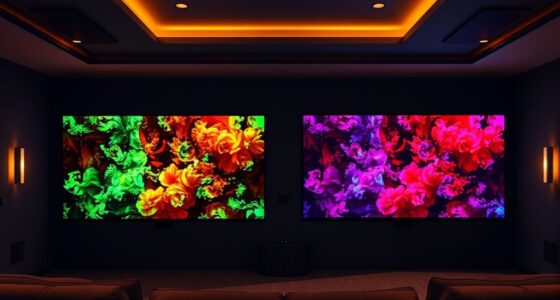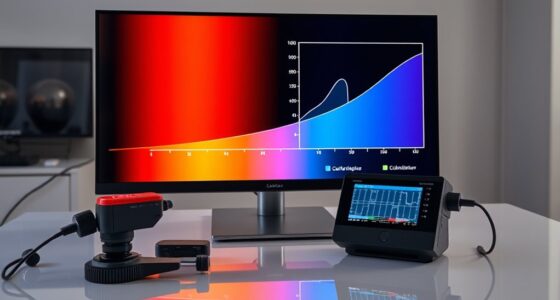

Ambient light considerably impacts your images by influencing their color and brightness. The type and quality of light, such as warm or cool tones, can make colors appear more yellow, reddish, or bluish, while the intensity of the light affects how bright or dark your photo looks. Reflection from surfaces can also introduce color shifts or distortions. Understanding these effects helps you anticipate how your scenes will appear, and if you keep exploring, you’ll discover how to control these factors more effectively.
Key Takeaways
- Ambient light influences the overall color palette and brightness of an image, altering its visual appearance.
- Variations in light temperature can make images appear warmer or cooler, affecting perceived colors.
- Surfaces reflect ambient light differently, which can introduce color casts and distort true colors.
- Brightness levels of ambient light determine exposure needs, impacting image clarity and color vibrancy.
- Changes in ambient lighting conditions can cause shifts in color accuracy and brightness in photographs.
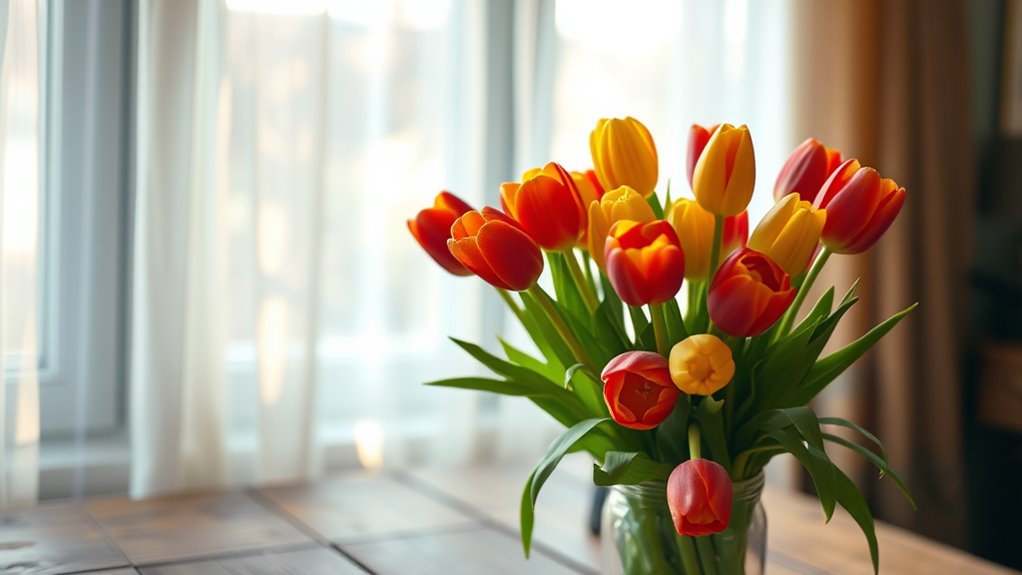
Have you ever noticed how the color of a photograph changes depending on the lighting conditions? It’s a common experience that highlights just how much ambient light influences the way images appear. When you take a picture, the ambient light around you isn’t just background; it actively shapes the colors and brightness you see. One key factor here is color temperature, which determines whether the light feels warm, cool, or neutral. Warm light, like that from a sunset or incandescent bulb, gives photos a yellowish or reddish hue, while cool light, such as daylight or fluorescent lighting, adds a bluish tint. As a photographer, understanding color temperature helps you anticipate how your image will look under different lighting conditions and adjust your camera settings accordingly.
Light reflection plays a crucial role in how ambient light impacts the colors in your photos. Surfaces in the environment—whether glossy floors, matte walls, or reflective objects—bounce light in various directions, altering the overall color perception. For example, if you’re shooting near a reflective surface, the light reflecting off it can introduce color casts that change the appearance of your subject. These reflections can intensify or diminish certain hues, sometimes even creating unwanted color shifts. If you’re working in a room with shiny surfaces, you might notice colors looking more saturated or distorted due to this light reflection. Recognizing how different surfaces reflect ambient light allows you to better control or compensate for these effects, ensuring your images stay true to the scene. Additionally, contrast ratio influences how well your camera can capture details in different lighting conditions, affecting overall image quality.
Surface reflections can alter color perception; controlling them ensures more accurate, true-to-scene images.
Brightness, or luminance, is also directly influenced by ambient light. The intensity of the available light determines how bright or dark your photo appears. In low-light environments, colors tend to look muted or washed out, and your camera may need longer exposure times or higher ISO settings to compensate. Conversely, in bright conditions, your images may become overexposed if you don’t adjust your settings, causing colors to lose their depth and vibrancy. Ambient light’s quality—its color temperature and reflection characteristics—affects how your camera perceives brightness. When you understand these aspects, you can better control exposure and white balance, leading to more accurate and visually appealing images.
Ultimately, ambient light isn’t just a passive background; it actively defines the visual tone of your photographs. By paying attention to how color temperature and light reflection influence color and brightness, you gain the power to manipulate your images intentionally. Whether you’re shooting indoors or outdoors, recognizing these factors helps you create photos that stay true to what you see—or creatively alter them to evoke a specific mood.
Frequently Asked Questions
How Does Ambient Light Influence the Perception of Image Saturation?
Ambient light directly influences how you perceive image saturation and color vibrancy. Bright, neutral lighting enhances visual saturation, making colors appear more vivid and lively. In contrast, dim or colored ambient light can dull colors, reducing perceived vibrancy and making images look washed out or less dynamic. You notice this effect especially when viewing photos or screens in different lighting conditions, as ambient light alters your perception of true color richness.
Can Ambient Light Conditions Alter the Perceived Sharpness of an Image?
Yes, ambient light conditions can alter how sharp an image appears. Bright lighting, especially with glare, can reduce contrast and make details seem less defined. To counter this, you should focus on glare reduction techniques and contrast enhancement methods, such as adjusting screen brightness or using anti-reflective coatings. These steps help maintain sharpness perception, ensuring your images look clear and detailed regardless of ambient lighting.
What Role Does Ambient Light Play in Color Temperature Adjustments?
Ambient light plays a vital role in color temperature adjustments, affecting how colors appear on your screen. Studies show that poor ambient lighting can cause up to a 20% decrease in color consistency. It influences ambient contrast, making colors look warmer or cooler depending on surroundings. You should calibrate your display for consistent color temperature, ensuring accurate color reproduction regardless of ambient lighting conditions.
How Does Ambient Light Variability Impact Color Calibration Accuracy?
Ambient light variability can disrupt your color calibration, making it hard to maintain color consistency across different environments. When lighting conditions change, calibration challenges arise because your display’s colors may shift, leading to inaccurate color reproduction. To guarantee accurate results, you need to regularly adjust your calibration settings or use controlled lighting conditions, helping you preserve true color representation and avoid inconsistencies that could compromise your work or viewing experience.
Are There Specific Lighting Conditions That Enhance Image Detail Visibility?
Did you know that diffused lighting improves image detail visibility by up to 50%? You’ll find that soft, evenly spread light enhances color contrast, making details pop without harsh shadows. When you choose conditions with controlled light diffusion, like overcast skies or using diffusers, your images gain clarity and depth. These lighting setups reduce glare and help reveal fine details, making your photos more vibrant and true to life.
Conclusion
In the end, understanding how ambient light softly influences your images helps you create visuals that feel more natural and inviting. By paying gentle attention to your surroundings, you can subtly guide your camera’s eye to capture colors and brightness just right. Embracing these subtle effects allows you to craft photos that truly resonate, turning simple moments into beautiful memories. After all, a little awareness goes a long way in making your images naturally shine.